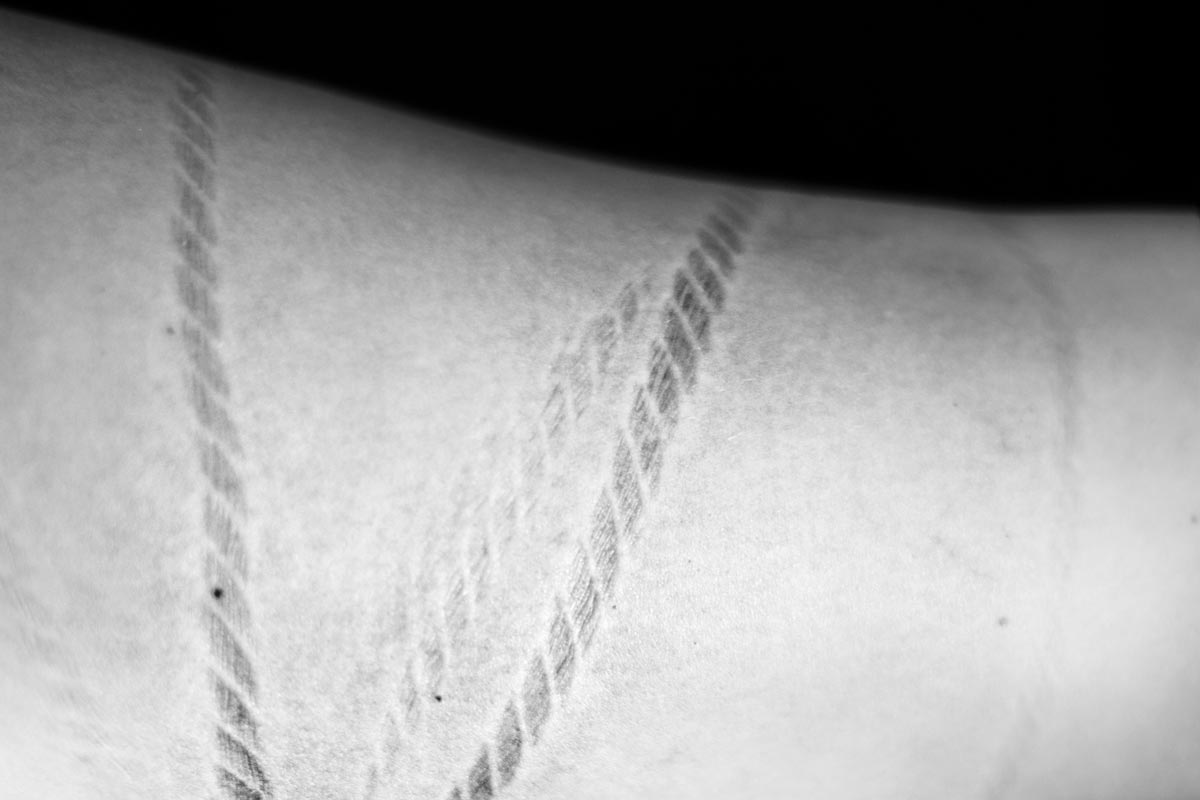
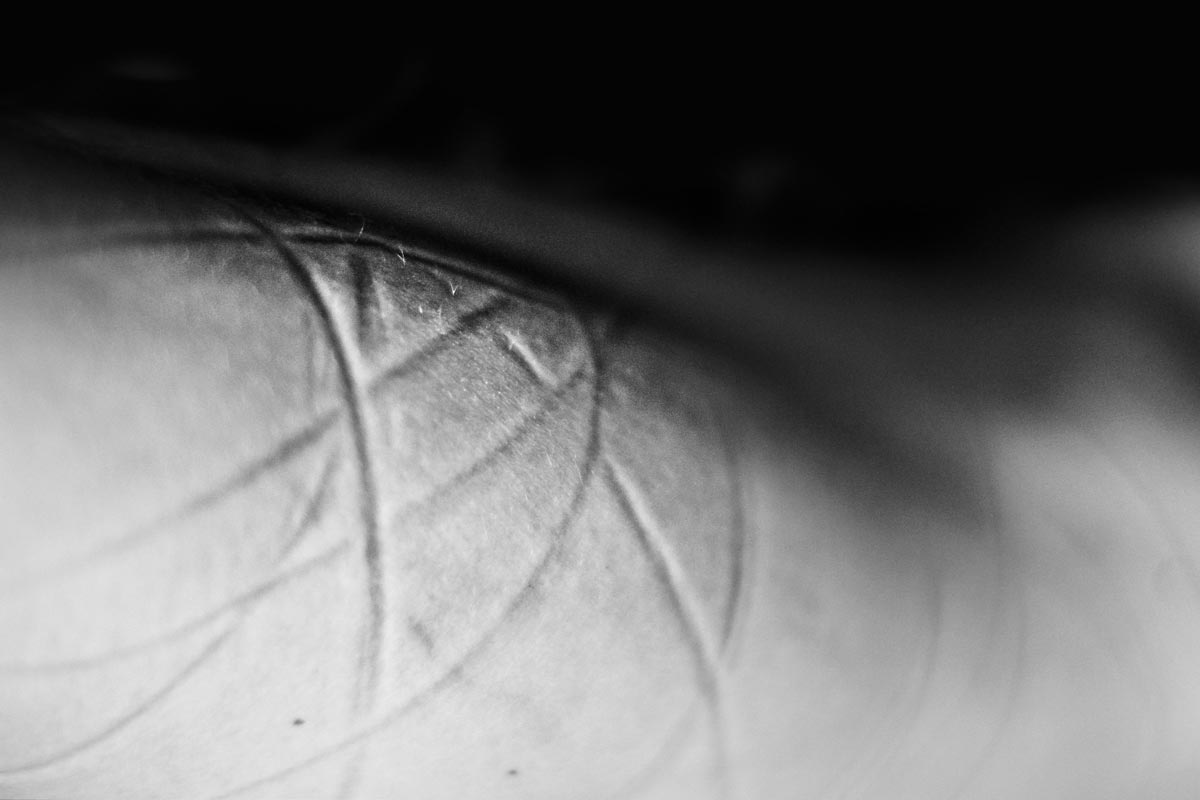
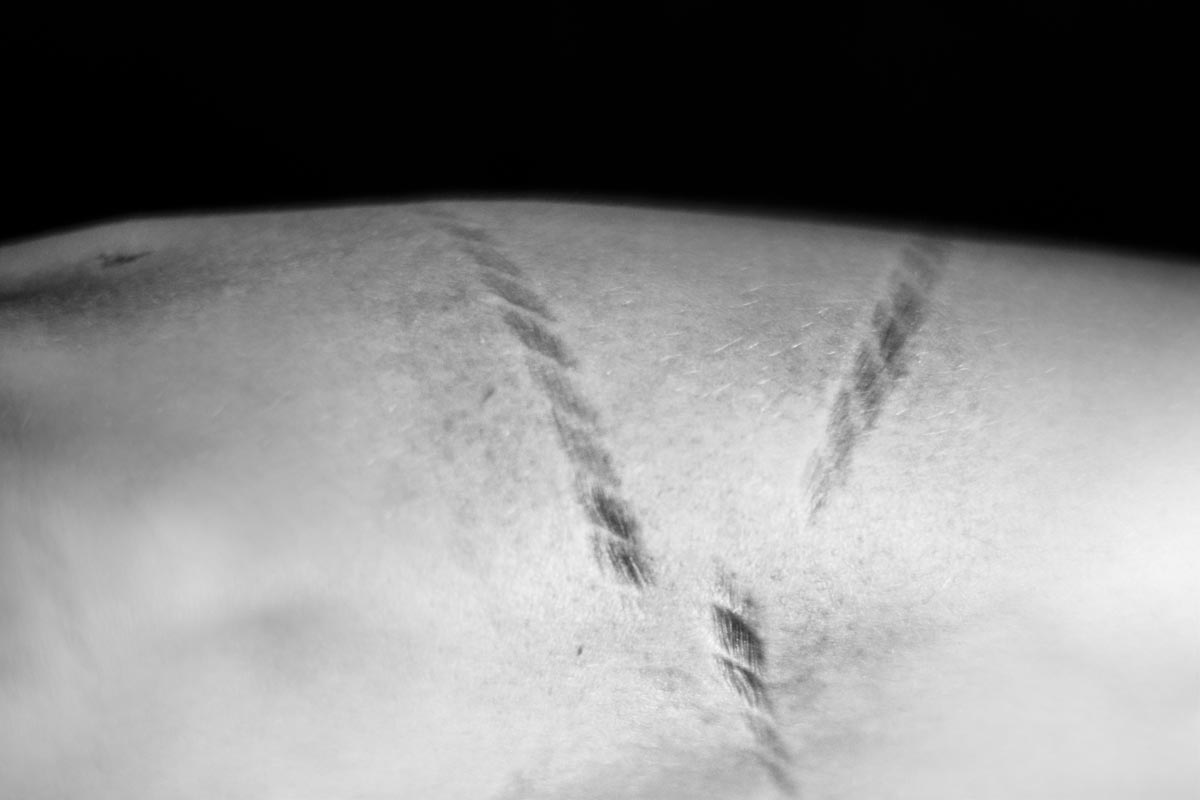
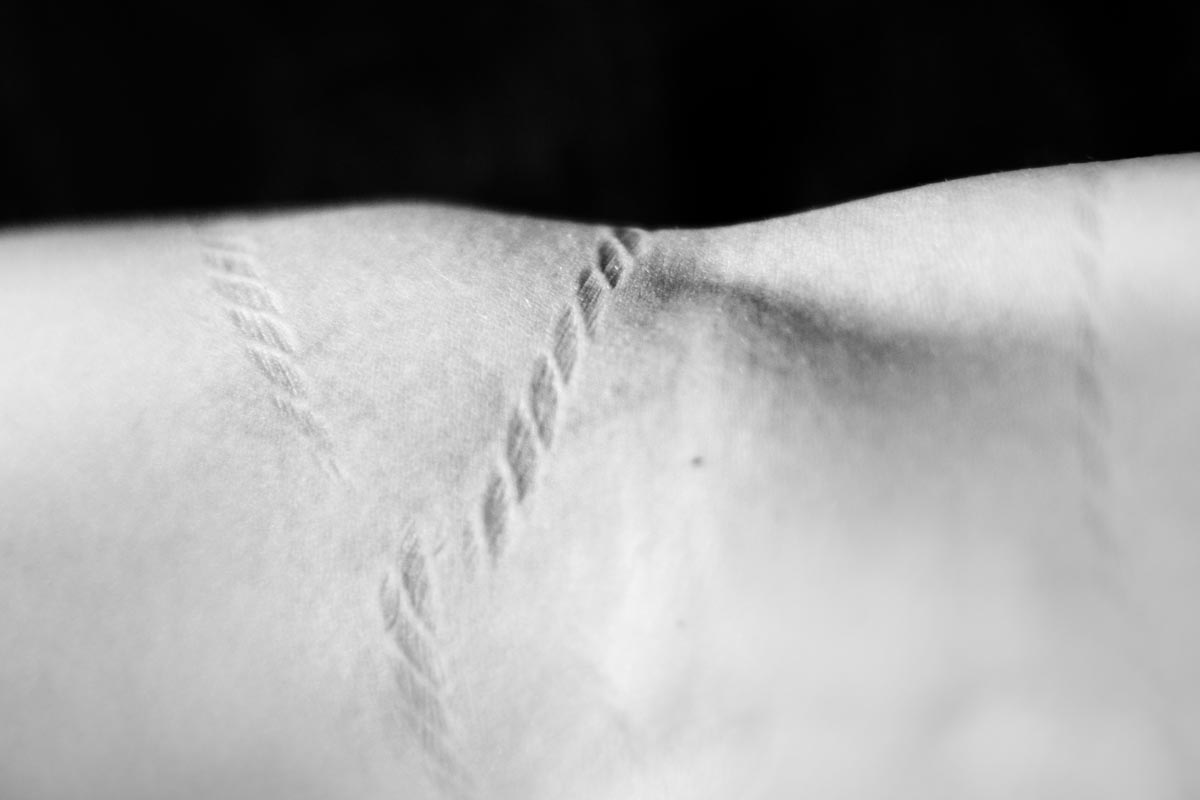
The oldest legend says, that the mythical imperial official 'Cangjie' invented the foundations of the Chinese ideo-graphic alphabet thousands of years ago, studying the traces of animals and birds, on the ground ... and Ernest Fenollosa and Ezra Pound resumed, millennia later, and always in mythological terms, this tradition. In fact, in 1954 Ezra Pound published his translation of the third of the Chinese classics under the title "The classical anthology defined by Confucius". (Harvard University Press). It was immediately recognized that these translations, or "translucencies" as some authors call them, were in a different category from the numerous ones that had preceded them. The marks on the skin of the photos of Eleonora Gugliotta, detach themselves from all eroticism and from the Japanese erotic tradition of Shibari, with which they have nothing to do. The signs on the skin, in this case, show only the traces, the 'bond' once it has dissolved, what you see, in the photos, is a physical bond, psychological material and immaterial that stigmatizes, in a new form, fragments of bodies without sex, demonstrating that the 'bond' referred to, relates to the human condition rather than gender. These pieces of flesh, marked, 'decorated', this body without organs of deleuziana memory, are presented to us 'naked', exposed, but without spiritualistic ambitions, only they are trace and sign, of the action of the artist. The bond is therefore yes, material and psychological, but it is presented in the form of a 'sign'.
Arianna Saroli